
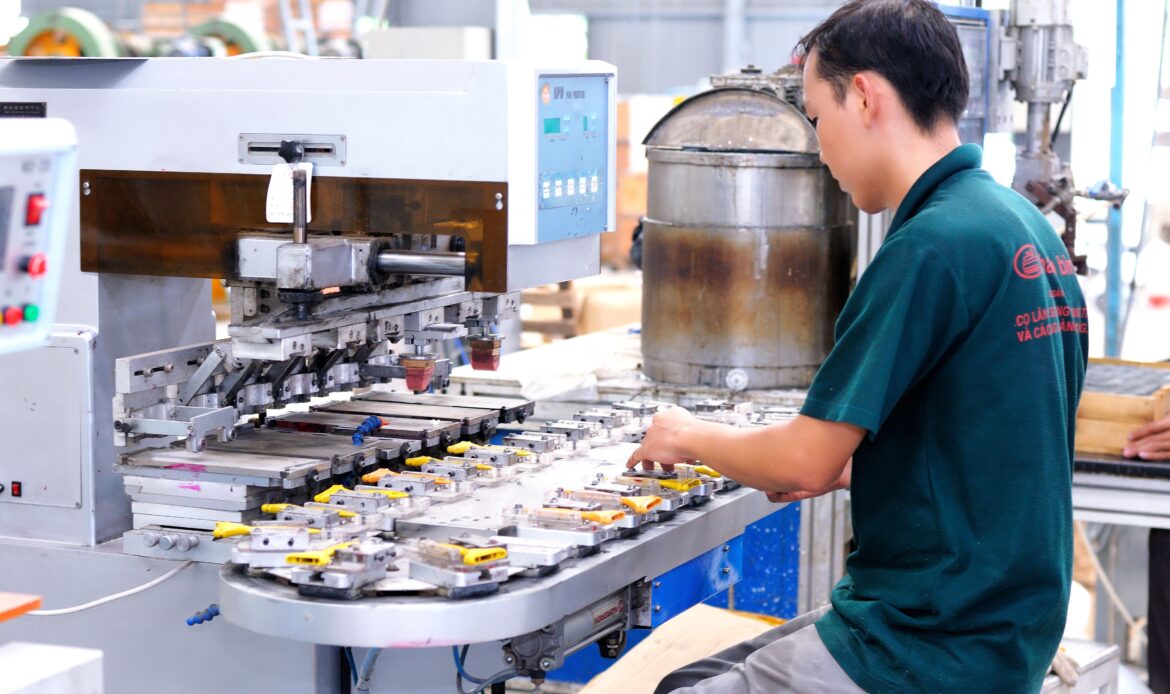
Romania has quietly become one of the most accessible European destinations for Nepali workers – and factory jobs are leading the way.
As Romanian manufacturing expands across automotive, food processing, textiles, and electronics, employers are actively hiring foreign workers, including Nepalese citizens, to fill thousands of open positions.
If you are a Nepali citizen looking for legal, well-paid factory work in Europe, this guide walks you through everything you need to know – from job types and salaries to eligibility, documents, and how to prepare the right way.
Why Romania Is Hiring Nepali Factory Workers
Romania is a full member of the European Union with a fast-growing industrial base. Local labor shortages have opened the door for skilled and semi-skilled workers from countries like Nepal.
Key reasons Romania is a strong choice:
- EU member status – work experience in Romania counts as European work experience.
- Lower cost of living compared to Western Europe, so your salary stretches further.
- Easier visa pathway for Nepali citizens compared to Germany, France, or the Netherlands.
- High demand for factory and production workers, especially in industrial cities like Bucharest, Cluj, Timișoara, Brașov, and Pitești.
- Pathway to long-term residency for workers who renew their contracts.
To learn more about the country itself, visit our dedicated Romania country page.
Types of Factory Jobs Available in Romania
Romanian factories hire across a wide range of industries. Most positions do not require advanced education – they require a willingness to learn, physical fitness, and basic discipline.
1. Automotive & Auto Parts Manufacturing
Romania is a major automotive hub in Eastern Europe, with companies like Dacia, Ford, and dozens of parts suppliers operating large plants.
Common roles:
- Assembly line operator
- Machine operator
- Quality control checker
- Packaging worker
- Forklift operator (with license)
2. Food Processing & Packaging
Food factories run year-round and offer some of the most stable contracts for foreign workers.
Common roles:
- Production line worker
- Meat processing operator
- Bakery and confectionery worker
- Cold storage worker
- Sorting and packaging staff
3. Textile & Garment Factories
A traditional sector that still employs thousands of foreign workers, especially women.
Common roles:
- Sewing machine operator
- Cutter and trimmer
- Ironing and finishing staff
- Quality inspector
4. Electronics & Appliance Assembly
Romania hosts plants producing electronics, white goods, and small appliances.
Common roles:
- Circuit board assembly worker
- Final product assembler
- Testing technician
- Warehouse and dispatch staff
5. Plastics, Furniture, and Light Manufacturing
A broad category covering everything from plastic injection molding to wooden furniture production.
For a wider list of in-demand roles beyond factory work, read our blog on the 15 jobs in Romania that desperately need Nepali workers right now.
Salary, Benefits & Working Conditions
Salaries in Romanian factories are not the highest in Europe, but they are stable, legal, and paid on time.
What you can typically expect:
- Monthly salary: roughly €700 to €1,200 net, depending on the role, overtime, and city.
- Working hours: 40 hours per week, with paid overtime above that.
- Free or subsidized accommodation provided by most factory employers.
- Free transport to and from the factory in many cases.
- Meal allowance or canteen meals, depending on the company.
- Paid leave and public holidays according to Romanian labor law.
- Health insurance and social security contributions paid by the employer.
Tip: Always confirm the salary, deductions, accommodation conditions, and contract length in writing before you fly. Verbal promises mean nothing in Europe.
Eligibility Requirements for Nepali Workers
Romania’s work visa system is reasonable but strict on documentation. To qualify for a factory job, you generally need:
- Age between 21 and 45 years (some employers accept up to 50).
- A valid Nepali passport with at least 18 months remaining validity.
- Clean criminal record from Nepal Police.
- Basic physical fitness – most factories require a medical certificate.
- No prior visa rejections from Schengen or EU countries (rejections are not automatic disqualifiers, but they must be disclosed).
- Basic English or Romanian language ability is a strong advantage.
- Willingness to commit to a 1 to 2 year contract.
You do not usually need a university degree for factory work. What matters more is reliability and the ability to follow instructions.
Documents You Will Need
Document preparation is the single biggest reason work visa applications get delayed or rejected. Get this part right and the rest becomes much easier.
Core documents required:
- Valid passport (original + copies)
- Updated CV in English or Romanian format
- Educational certificates (SEE, +2, or higher) with translation
- Skill or training certificates, if any
- Police clearance certificate
- Medical fitness certificate
- Recent passport-size photos with white background
- Bank statement or financial proof, where requested
- Signed employment contract from the Romanian employer
- Work permit issued by Romanian authorities (the employer applies for this)
For a detailed step-by-step breakdown, read our dedicated guide: How to prepare your documents for a Romanian work visa – a complete guide for Nepali citizens.
You can also explore our document preparation service for hands-on help.
Step-by-Step Process: From Nepal to a Romanian Factory
Here is the realistic, honest sequence of how a Nepali citizen reaches a factory job in Romania:
- Free consultation – assess your eligibility, goals, and budget.
- Document preparation – gather, translate, and verify all required papers.
- Job matching through a licensed recruiter – in our case, our partner EJS Europe handles direct placement with verified Romanian employers.
- Employment contract signed with the Romanian employer.
- Romanian work permit issued by the General Inspectorate for Immigration (the employer applies for this on your behalf).
- Work visa application filed at the relevant Romanian embassy or visa center.
- Visa interview and biometric submission.
- Visa approval – typically 30 to 90 days after submission.
- Pre-departure orientation – language, culture, and workplace expectations.
- Travel to Romania and start work, with on-arrival residence permit registration within 90 days.
For deeper visa guidance, see our Work Visa Romania page and our general visa guidance service.
How AMC Nepal Prepares You for a Factory Job in Romania
It is important to be clear: AMC Nepal is not a recruitment agency. We do not hold a manpower license and we do not place workers in jobs directly.
What we do is far more valuable – we prepare you so that when the opportunity comes, you are completely ready.
Our preparation services include:
- Visa guidance – step-by-step support through the work visa process.
- Document preparation – translation, attestation, and complete checklist support.
- Romanian language training – basic conversational Romanian to help you settle in faster.
- Pre-departure orientation – workplace norms, cultural awareness, and practical daily-life preparation.
- Career training – soft skills, communication, and workplace discipline.
Learn more about our team and approach on the About Us page.
The Role of EJS Europe – Our Trusted Recruitment Partner
Actual job placement is handled by our European partner, EJS Europe – a licensed European recruitment company that connects Nepali workers with verified employers in Romania.
What EJS Europe brings to the process:
- Verified Romanian employers only – no shell companies, no fake offers.
- Legal contracts signed before you leave Nepal.
- Direct relationships with factories across automotive, food processing, logistics, and hospitality sectors.
- Transparent terms on salary, accommodation, and contract length.
- Ongoing support once you arrive in Romania.
This partnership is what makes the AMC Nepal pathway different from typical “promise everything” agencies – your preparation happens in Nepal with us, your placement happens through a licensed European recruiter.
Common Challenges and How to Avoid Them
A few honest warnings from a consultancy that has seen many cases:
- Avoid agents who promise guaranteed jobs in 30 days. Real visa processing takes 2 to 4 months minimum.
- Avoid paying huge upfront “job fees.” Legitimate recruitment costs are regulated.
- Avoid fake offer letters. Always verify the employer through official Romanian government channels or through a licensed recruiter like EJS Europe.
- Do not skip language training. Even 50 to 100 basic Romanian words drastically improve your daily life and earnings potential.
- Read your contract carefully – especially clauses on accommodation deductions, overtime, and contract termination.
Is Romania the Right European Country for You?
Romania is a strong starting point, but it is not the only option. Cyprus, Poland, Croatia, and Portugal also actively hire Nepali workers in 2026.
If you are still comparing destinations, read our overview blog: Top 5 European countries hiring Nepali workers in 2026.
Frequently Asked Questions
Can I bring my family to Romania on a factory worker visa?
Family reunification is possible, but usually only after you have completed your first year of legal work and renewed your residence permit. The income threshold also matters.
Do I need to speak Romanian to get a factory job?
Not always required, but strongly recommended. Many factories operate with mixed nationality teams where basic Romanian or English is enough – but learning Romanian opens better roles and faster promotions.
How much does the entire process cost?
Costs vary based on documentation, translation, and language training. Be cautious of anyone quoting a flat “all-inclusive” rate without explaining the breakdown. Book a free consultation for an honest, personalized estimate.
Can I switch employers after arriving in Romania?
Yes, but only after completing the initial contract terms and following Romanian labor law procedures. Switching employers without legal process can risk your residence permit.
Is Romania a good pathway to other EU countries?
Yes. After a few years of legal work and residence in Romania, you can explore opportunities in other EU member states more easily, since you build a documented European work history.
Ready to Start Your Journey?
Factory jobs in Romania are a realistic, legal, and rewarding path for Nepali citizens who are ready to work hard and prepare properly.
The difference between a smooth journey and a failed application almost always comes down to preparation – documents, language, mindset, and the right partners.
At AMC Nepal, we prepare you. Through EJS Europe, you get placed. Together, you arrive in Romania fully ready to succeed.
Book a free consultation with AMC Nepal today and let’s build your Europe plan together.For more guidance and updates, explore our blog for the latest articles on working and studying in Europe.