
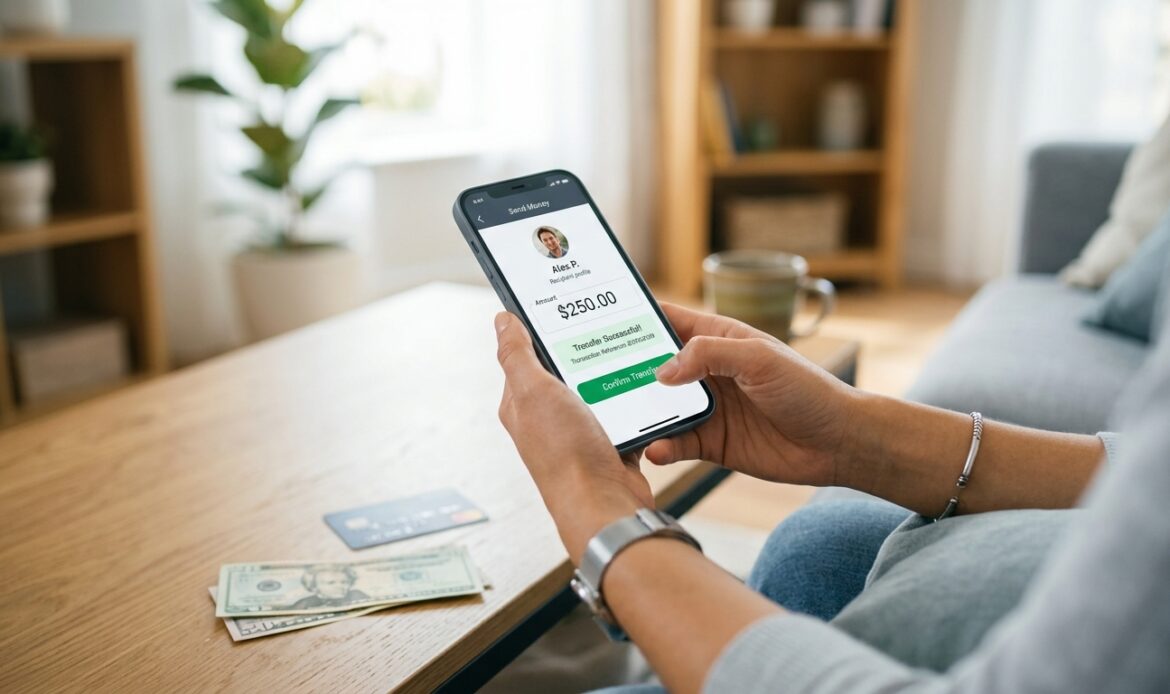
You worked hard for this money. Every shift, every overtime hour, every sacrifice of being far from home – all of it converts into the salary that arrives in your Romanian bank account at the end of each month. What you do with it next matters as much as how you earned it.
Sending money home should be the simplest part of working abroad. For too many Nepali workers, it becomes a source of confusion, anxiety, and in some cases – genuine financial loss to fraud.
This guide covers how to send money safely from Romania to Nepal – the legitimate channels, the warning signs of fraud, and the practical steps that protect both your money and your family’s trust in the system you are using.
Why This Matters More Than Most Workers Realise
Remittances are not a side detail of working abroad. They are the entire point for most Nepali workers – and for Nepal as a country. Migrant worker remittances have been one of the largest sources of external finance for Nepal for years, supporting household consumption, children’s education, healthcare, and small business investment for millions of families.
This is exactly why remittance fraud is such a serious and persistent problem. Fraudsters specifically target migrant workers – people sending money internationally, often under time pressure, often managing the transaction in a language and financial system that is not their first language, and often dealing with family back home who are anxiously waiting for funds to arrive.
Understanding how to send money safely is not a minor administrative task. It is one of the most practically important skills you need as a Nepali worker in Romania.
The Legitimate Channels for Sending Money from Romania to Nepal
Bank Transfers
Once you have opened a Romanian bank account – typically possible after your residence permit is issued – direct bank transfers to a Nepali bank account are one of the most secure options available. Romanian banks including Banca Transilvania, BRD, and Raiffeisen offer international transfer services to Nepal.
Bank transfers are traceable, regulated, and protected by formal banking compliance standards on both ends. The transaction is documented, the institution is accountable, and the process – while sometimes slower than other options – is among the most secure available to you.
Established Money Transfer Operators
Western Union and MoneyGram are the most widely recognised international money transfer services and have extensive networks in both Romania and Nepal. They allow cash pickup, bank deposit, or mobile wallet delivery in Nepal – making them accessible even for family members in areas without easy bank access.
These services are formally licensed, regulated, and have established fraud protection systems. Transactions are traceable and the companies have accountability structures that informal transfer methods do not.
Digital Remittance Platforms
A growing number of digital remittance services – including Nepal-based platforms like eSewa Money Transfer – have built formal channels specifically designed to serve migrant workers and their families. These platforms allow cash pickup, bank transfer, or mobile wallet deposit and have extensive agent networks across Nepal – including more than 13,800 dedicated remittance agent locations, which matters significantly for families in rural areas where traditional banking access is limited.
This is a genuinely important development for Nepali workers. In a country where a significant portion of the population remains unbanked or underbanked – particularly in rural and mountainous areas – digital remittance platforms with extensive agent networks solve a real practical problem that bank transfers alone do not.
Government-Backed Digital Remittance Services
Just weeks ago, Nepal and India launched a new digital remittance service specifically designed for migrant workers – allowing transfers through mobile banking apps and reducing reliance on informal agents and channels. This reflects a broader trend across the region toward formal, government-supported digital remittance infrastructure that protects migrant workers from the risks of informal transfer methods.
While this specific service is focused on the Nepal-India corridor, it signals the direction Nepal’s remittance infrastructure is moving – toward more formal, more digital, more traceable channels. AMC Nepal stays updated on developments in formal remittance infrastructure relevant to Romania-based workers and shares this information as part of our pre-departure orientation.
Why Formal Channels Matter So Much
The temptation to use informal transfer methods – a trusted community member traveling back to Nepal who can carry cash, an informal money exchange network operating through personal relationships rather than formal institutions – is understandable. These methods sometimes feel faster, more familiar, and free of the documentation that formal channels require.
They are also significantly riskier – for reasons that go beyond the obvious risk of carrying physical cash.
Informal transfers have no regulatory protection. If something goes wrong – money lost, delayed, or simply never delivered – there is no institution accountable for resolving the problem. There is no transaction record, no fraud protection, and in most cases, no realistic path to recovering lost funds.
Formal channels – banks, licensed money transfer operators, regulated digital platforms – operate under financial compliance standards that exist specifically to protect the people using them. Every transaction is documented. Every provider is accountable to a regulatory body. And critically, anti-money laundering measures and increased reporting requirements over the past two decades have made formal channels significantly safer and more transparent than they were a generation ago.
The slight inconvenience of formal documentation is a small price for the protection it provides.
The Most Common Scams Targeting Migrant Workers
Understanding how remittance fraud actually works helps you recognise it before it costs you anything.
The Fake Transfer Provider
Fraudsters create websites and apps that closely mimic legitimate remittance providers – copying branding, logos, and even customer reviews. A Nepali worker searching for a remittance service online can land on a fake platform that looks completely authentic, enter their banking details, and have their money – and their financial information – stolen.
The protection against this is simple but essential – only use remittance platforms that AMC Nepal, your employer, or the established Nepali community in your city actually recommend and use. Verify any new platform through its official app store listing or through direct confirmation with people who have used it successfully.
The Phishing Message
A message arrives – by SMS, WhatsApp, or email – appearing to come from your bank or remittance provider, warning of a problem with your account or a pending transfer. A link directs you to a fake website that closely replicates the real provider’s login page. When you enter your credentials, the fraudster captures them and uses them to access your actual account or redirect your transfers.
Legitimate financial institutions do not ask you to confirm your password or PIN through a text message or email link. If you receive a message like this, do not click the link. Contact your bank or remittance provider directly through their official app or website to verify.
The Emergency Scam
A message – sometimes appearing to come from a family member’s number, sometimes from an unfamiliar number claiming to be a friend or relative in distress – asks for an urgent money transfer due to a medical emergency, legal trouble, or other crisis. The urgency is designed to prevent you from verifying the story before sending money.
If you receive an emergency request for money, verify directly with the person through a different communication channel – a phone call, not just a reply to the same message – before sending anything. Fraudsters specifically exploit the natural worry people feel for family members.
The Too-Good Exchange Rate
Some informal exchange operators or unfamiliar platforms advertise exchange rates that are noticeably better than every formal channel. This is frequently a trap – the favourable rate applies only to a small first transaction designed to build trust, after which fees increase, the rate worsens, or the platform simply disappears with a larger transfer.
If an exchange rate looks significantly better than what reputable banks and established remittance platforms are offering, treat it as a warning sign rather than an opportunity.
The Unregulated Local Agent
In both Romania and Nepal, informal individuals sometimes offer to facilitate money transfers outside formal channels – promising faster delivery or lower costs. Without regulatory oversight, accountability, or a documented transaction trail, these arrangements carry significant risk. If the money does not arrive, there is no formal mechanism to recover it.
How to Protect Yourself: A Practical Checklist
Use only licensed, established providers. Banks, recognised international money transfer operators, and digital remittance platforms with verifiable regulatory status and a track record serving the Nepali community.
Never share your login credentials, PIN, or one-time passwords with anyone – not your bank, not your remittance provider, not a colleague offering to help, not anyone claiming official authority over the phone or by message.
Verify any message claiming to be from your bank or remittance provider by contacting them directly through their official app or published contact number – never through a link or number provided in the suspicious message itself.
Keep transaction records. Every transfer you make should have a confirmation number, a receipt, or a transaction record you can refer back to if something goes wrong.
Set up notifications on your bank account and remittance app so you are immediately alerted to any transaction – allowing you to catch unauthorised activity quickly.
Verify emergency requests independently before sending money in response to any urgent message – by calling the person directly, not by replying to the message that requested funds.
Be skeptical of unusually favourable exchange rates from unfamiliar or unlicensed providers.
Ask the established Nepali community in your city which remittance services they actually use successfully. This informal verification – based on real experience rather than advertising – is one of the most reliable forms of protection available.
What AMC Nepal Covers Before You Travel
Money management – including remittance safety – is part of the practical daily life preparation AMC Nepal covers in our pre-departure orientation. This includes guidance on opening a Romanian bank account once your residence permit is issued, understanding which remittance services are reliable and widely used by the Nepali community, and recognising the warning signs of fraud before they cost you anything.
We also cover the practical timeline – understanding that in the period before your residence permit is issued and your Romanian bank account is opened, your employer may use alternative payment arrangements, and how to manage remittances during this transitional period safely.
Learn more about our complete preparation services on our About Us page.
Final Thoughts
The money you earn in Romania represents months of hard work, time away from family, and genuine sacrifice. Protecting it through your transfer home is not a minor administrative detail – it is one of the most important practical skills of your entire Romania work journey.
Use formal, licensed channels. Verify before you trust. Be skeptical of urgency and unusually favourable offers. And lean on the established Nepali community around you – their experience is one of your most valuable resources.
At AMC Nepal, we prepare you for every practical dimension of life in Romania – including making sure the money you work so hard for actually reaches the people it is meant for.
Book a free consultation with AMC Nepal today and let’s make sure you arrive fully prepared.