
Most Nepali workers preparing for Romania focus on the same things – documents, work permit, visa, salary. Experience in a trade or a sector feels like the most important qualification for getting and keeping a job in Europe.
Experience matters. Nobody is saying it does not.
But what AMC Nepal has observed – across years of preparing Nepali workers for Romania and tracking what happens to them after they arrive – is that the workers who perform best, earn the most, stay longest, and build the most durable European careers are not always the most technically experienced. They are almost always the ones who invested in language before they traveled.
This is not a minor observation. It changes the entire calculus of how to prepare for Romania – and why Romanian language training is not an optional add-on to the preparation process but one of the most consequential investments a Nepali worker can make before they board their flight.
What Experience Gets You – and What It Does Not
Experience gets you the job. In Romania’s employer-driven work permit system, your skills and background determine which roles you are matched to, which contracts you are offered, and which sectors you can enter.
A Nepali worker with five years of welding experience has access to better roles, better contracts, and better initial placement conditions than a worker with no relevant background. A worker with hotel housekeeping experience has a smoother entry into Romania’s hospitality sector than someone starting from zero. Experience is the entry ticket.
But entry is not the whole journey.
What determines whether your first contract becomes a second? Whether your salary improves at renewal? Whether you move from the production line to the quality control role? Whether the supervisor considers you for the line leader position that opened up in month eight?
None of these outcomes are determined by what you knew when you arrived. They are determined by what the supervisor, the employer, and the Romanian system can do with you – and that is substantially determined by your ability to communicate.
What Language Actually Does in a Romanian Workplace
Understanding why language matters requires understanding how Romanian workplaces actually operate day to day.
Romanian supervisors give instructions in Romanian. Safety briefings happen in Romanian. Production target updates are announced in Romanian. Shift change communications happen in Romanian. The conversation that determines whether you are assigned to the better machine, the better shift, or the training opportunity – happens in Romanian.
A worker who cannot participate in these conversations is a worker whose professional life is conducted entirely through intermediaries – a bilingual colleague who translates, a supervisor who simplifies, a system that accommodates the language gap. This accommodation is genuinely provided in Romanian workplaces that regularly employ non-EU workers. But it has a ceiling.
The worker who can follow the Romanian briefing directly – who can confirm an instruction, ask a clarifying question, report a problem, and communicate a need without waiting for translation – is operationally more valuable to the employer than the worker who cannot. This operational value translates directly into the informal assessments that determine who gets considered for better opportunities.
Language also determines social integration. The Nepali worker who can exchange a few words with Romanian colleagues, who can participate in the break room conversation even at a basic level, who can greet the supervisor in Romanian and be greeted back – is building professional relationships that the silent, linguistically isolated worker is not. Those relationships are the informal network through which opportunities are communicated, recommendations are made, and professional standing is built.
The Specific Ways Language Improves Your Romania Outcomes
Safety
In Romanian industrial environments, safety instructions are legally enforced requirements – and misunderstanding them creates genuine physical risk. A worker who cannot understand a Romanian safety instruction cannot comply with it correctly. The consequence is either a safety incident or a formal disciplinary record – neither of which is good for the worker’s contract renewal prospects.
Workers who arrive knowing Nu înțeleg – I do not understand – and Puteți repeta, vă rog? – Can you please repeat? – can at minimum flag when they have not understood something that matters. Workers with more developed Romanian can understand the instruction the first time and comply correctly without flagging at all.
Performance Assessment
Performance reviews in Romanian workplaces are not always formal written evaluations. They are often informal – the supervisor’s running assessment of a worker’s reliability, attitude, and capability that crystallises into a recommendation at contract renewal time.
A worker who communicates well – who confirms instructions, reports problems clearly, asks relevant questions, and engages professionally with supervisors and colleagues – is assessed more positively than a worker of equal technical capability who communicates poorly. This is not unique to Romania. It is a universal feature of professional environments. What makes Romania specific is that the communication happens in Romanian.
Promotion and Advancement
Line leader, quality control, and team coordinator roles in Romanian manufacturing environments almost always require functional Romanian. These roles involve giving instructions to other workers, communicating with supervisors, and managing production-related documentation – all in Romanian.
A technically skilled Nepali worker who cannot communicate in Romanian cannot be considered for these roles regardless of their experience or performance record. A worker with adequate technical skills and functional Romanian is a candidate the employer can develop.
The difference in earnings between a production line worker and a line leader or quality control position over the course of a two-year contract is real and meaningful. Language is one of the primary gates between these levels.
Daily Life Quality
Outside the workplace, Romanian language ability transforms daily life in ways that directly affect wellbeing and by extension performance.
A worker who can navigate public transport in Romanian, communicate with the dormitory manager, handle a simple interaction at the pharmacy, and ask for what they need at the supermarket – lives a different daily experience from one who cannot do any of these things.
This daily experience difference accumulates. Workers who feel competent and capable in their daily environment are psychologically more settled and emotionally more resilient than those who feel constantly helpless outside the workplace. That resilience translates into more consistent workplace performance and more successful overall adjustment to life in Romania.
The Window Nobody Uses Well – and AMC Nepal Does
Here is the practical reality that most Nepali workers miss.
The Romanian work permit processing stage – during which the IGI reviews the employer’s application – takes 60 to 90 days. This is the longest single stage in the entire Romania work journey. For most Nepali workers, it is 60 to 90 days of waiting.
AMC Nepal uses this window differently.
During the work permit processing stage, AMC Nepal delivers Romanian language training alongside pre-departure orientation and career training – so that the time the government needs to process your permit is also the time you spend building the language foundation that will determine your outcomes in Romania.
Workers who complete AMC Nepal’s Romanian language training during this window arrive in Romania with practical vocabulary, essential workplace phrases, daily life communication basics, and the confidence that comes from having prepared rather than hoping. They do not arrive fluent. They arrive ready – and ready is what matters in the first weeks when every interaction is new and every conversation requires effort.
This is the investment that most informal agents never mention and that most workers never make – and it is one of the clearest differentiators between workers who settle in quickly and workers who struggle through their first months.
What Basic Romanian Actually Sounds Like in Practice
The goal of AMC Nepal’s Romanian language training is not fluency. It is functional communication – the specific vocabulary and phrases that cover the realistic communication situations of a Nepali worker’s daily life in Romania.
In the workplace this means knowing how to say:
- I understand – Înțeleg
- I do not understand – Nu înțeleg
- Can you repeat please – Puteți repeta, vă rog?
- More slowly please – Mai încet, vă rog
- I have finished – Am terminat
- There is a problem – Există o problemă
- Where is the exit – Unde este ieșirea?
- I need help – Am nevoie de ajutor
In daily life this means knowing how to:
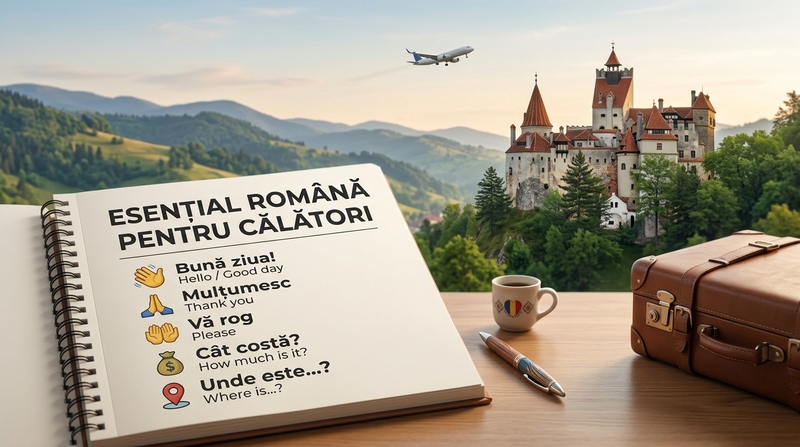
- Greet people – Bună ziua, bună dimineața, bună seara
- Say thank you – Mulțumesc
- Ask for something at a shop – Aș dori…
- Ask where something is – Unde este…?
- Understand numbers for prices, times, and quantities
- Navigate simple transport interactions
This is not an enormous vocabulary. A motivated worker with AMC Nepal’s structured language program can cover this ground in 4 to 6 weeks. And these 4 to 6 weeks of investment – made during the work permit waiting period – change the entire first month of the Romania experience.
What the Research Says – and What Experienced Workers Say
The research on language and migrant worker outcomes is consistent. Studies across multiple EU countries confirm that non-EU workers with even basic host-country language skills earn more, experience higher job satisfaction, are more likely to have their contracts renewed, and are less likely to return home before completing their contract than workers without language preparation.
The experienced Nepali workers in Romania say the same thing in less academic language.
When AMC Nepal asks workers who have been in Romania for a year or more what they wish they had done differently before arriving – learning more Romanian before coming is one of the most consistent answers. Not as a regret about a major failure, but as a clear-eyed recognition that the first month would have been easier and the first year would have been more productive with better language preparation.
The workers who say they wish they had done more language preparation are not the workers who failed in Romania. They are the workers who succeeded – and who can see clearly in retrospect what would have made their success even more durable.
Experience Plus Language – The Combination That Works
This is not an argument that experience does not matter. It is an argument that experience alone is not enough.
The combination that produces the best outcomes in Romanian workplaces is technical experience – in your trade, your sector, your role – combined with functional Romanian language ability. Experience gets you placed correctly and performing competently from day one. Language gets you noticed, developed, advanced, and retained.
A skilled welder with functional Romanian is a better candidate for a senior welder or quality control role than a skilled welder without Romanian. A reliable hotel housekeeper with functional Romanian is a better candidate for a housekeeping supervisor role than one without. An experienced construction worker with functional Romanian is a better candidate for a site team leader position than one without.
The language does not replace the experience. It multiplies it.
How AMC Nepal Prepares You
AMC Nepal’s Romanian language training is one of five core preparation services we deliver to every Europe-bound worker – alongside visa guidance, document preparation, pre-departure orientation, and career training.
The language training is:
- Practical rather than academic – focused on workplace vocabulary and daily life communication rather than grammar rules
- Delivered in Nepali – so every element of the program is fully understood before you travel, not partially understood in a foreign language after you land
- Scheduled during the work permit processing window – so it adds no additional time to your overall journey
- Calibrated to your specific sector – factory, construction, hospitality, or other – because the vocabulary that matters most differs by workplace environment
Visit our Romanian language training page for more detail on what the program covers and how it is delivered.
Our full preparation package also includes pre-departure orientation – covering Romanian workplace culture, legal rights, arrival logistics, and embassy interview preparation – and career training covering the professional conduct and workplace habits that determine whether your first contract leads to a second.
Final Thoughts
Experience gets you to Romania. Language determines what you build when you get there.
The Nepali workers who build the most successful European careers in Romania are not always the most experienced. They are the ones who arrived with enough Romanian to communicate, enough professional preparation to perform well from day one, and enough support around them to navigate the inevitable challenges of living and working far from home.
AMC Nepal prepares you for all of it – the visa, the documents, the language, and the daily reality of a Romanian workplace. Not because these things are complicated individually, but because getting all of them right simultaneously is what determines whether your Romania work journey is a success or a struggle.
Book a free consultation with AMC Nepal today and let’s make sure you arrive in Romania with everything you need – including the Romanian to use it.